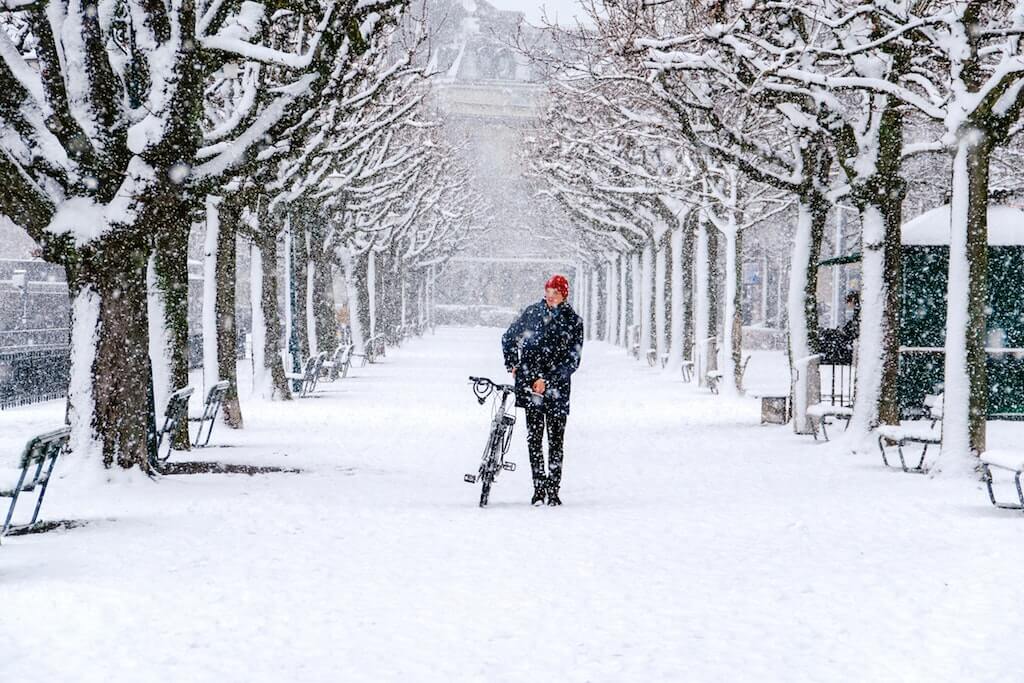
Winter Bike Maintenance in Boston: How to Protect Your Ride
Boston winters destroy bikes fast. Salt, slush, and freeze-thaw cycles attack every component. Here's how to keep your bike running through the worst of it — or store it properly until spring.
Boston winters are hard on bikes. Road salt, slush, freezing rain, and daily freeze-thaw cycles cause corrosion, seized parts, and premature wear. A bike that ran perfectly in October can feel like a different machine by January.
Whether you're riding through winter or tucking your bike away until spring, how you maintain it during these months determines how much you'll spend on repairs later.
Cleaning after winter rides
Salt is the single biggest threat to your bike in a Boston winter. The city lays down thousands of tons of road salt and brine between November and March. That salt spray coats your frame, works into cable housing, and eats your drivetrain alive.
How salt destroys your drivetrain
Salt accelerates chain wear and corrodes derailleur springs, cable ferrules, and even spoke nipples. Left unchecked, a single winter can ruin a chain, cassette, and chainrings. That's easily $150+ in parts on a decent bike.
The fix is simple but requires discipline. After every wet or slushy ride, wipe down your chain, frame, and brakes with a damp rag. Once a week, do a more thorough cleaning with warm soapy water and a brush.
What not to do
Never use a pressure washer on your bike. High-pressure water forces salt and grit past seals and into bearings, hubs, and your bottom bracket. A bucket and brush are all you need. Pay extra attention to the underside of the down tube, the bottom bracket area, and the rear triangle. Those catch the most spray.
Lubrication in cold weather
Your summer chain lube won't cut it in a Boston winter. Understanding the difference between wet and dry lube saves you money and hassle.
Wet lube vs. dry lube
Wet lube is what you want for winter. It's thicker, stickier, and resists being washed away by rain, slush, and road spray. The downside is that it attracts dirt and grit, so you need to clean your chain more often. That's a tradeoff worth making. A dirty chain is better than an unlubed chain.
Dry lube is useless in winter conditions. It washes off in one wet ride, leaving your chain unprotected. Save it for summer.
How to apply winter lube
Clean your chain first. Apply one drop of wet lube per link, backpedal a few revolutions to work it in, then wipe off the excess with a rag. Re-lube every 2-3 rides in wet conditions, or weekly if you ride daily.
Tires for Boston winter riding
Tire choice makes a real difference between a confident ride and a trip to the emergency room.
Studded tires
If you ride on icy streets, studded tires are worth the investment. They bite into ice that would send slick tires sliding. Schwalbe Marathon Winter and Continental Top Contact Winter are popular options. They're heavier and slower, but staying upright matters more than speed.
You don't need studs for slush or wet roads, only ice. If your commute sticks to treated main roads like Beacon Street or Commonwealth Ave, aggressive tread may be enough.
Tire pressure in cold weather
Cold air contracts. Your tires lose roughly 1-2 PSI for every 10-degree drop in temperature. A tire inflated to 80 PSI in your warm apartment might be at 65 PSI by the time you hit the road. Check pressure before every ride in winter.
Running slightly lower pressure, about 10-15% below your summer setting, also improves grip on wet and slushy surfaces. The larger contact patch gives you more traction.
Flat prevention
Winter roads are littered with debris: broken glass, metal fragments, sand. Consider tires with a puncture protection belt like Schwalbe Marathon Plus. They're heavy, but flats in 20-degree weather are miserable. Carry a spare tube and a CO2 inflator. Cold fingers and a frame pump don't mix.
Brake check: salt gunk and cold weather issues
Brakes are safety-critical, and winter conditions degrade them fast.
Rim brakes
Salt and grit build up on rim brake surfaces, acting like sandpaper on your rims. Wipe your rims and brake pads after wet rides. Inspect pads for embedded grit. A piece of metal in a brake pad will score your rim and ruin it.
Wet, cold rims also reduce braking power significantly. Give yourself extra stopping distance and brake earlier than you normally would.
Disc brakes
Disc brakes perform better in winter overall, but they're not maintenance-free. Salt contamination on rotors causes squealing and reduced performance. Clean rotors with isopropyl alcohol periodically. Avoid touching rotors and pads with bare hands, since skin oils contaminate the surface.
Cable stretch in cold
Steel brake and shift cables contract in cold weather, which changes your adjustment. You might notice brakes feel tighter or shifts become imprecise. If your brakes feel off on cold mornings, it's likely a cable tension issue, not a sign of something broken.
Storage tips if you're not riding through winter
Not everyone wants to battle Boston winters on two wheels. Fair enough. If you're storing your bike from November to March, do it right.
Prep before storage
Clean your bike thoroughly. Don't store it with salt residue on the frame. Lube the chain lightly to prevent rust. Inflate tires to their recommended pressure, or slightly above, to prevent flat spots from developing during months of sitting.
Where to store
A climate-controlled space is ideal. A heated basement or inside your apartment protects against moisture and temperature swings. An unheated garage is better than outside, but condensation will form on metal surfaces during temperature changes. If garage storage is your only option, cover the bike and apply a light coating of frame protectant or even WD-40 on bare metal surfaces.
What to avoid
Don't hang your bike by the wheels for extended storage if you have hydraulic disc brakes. Air bubbles can migrate in the brake lines. Hang by the frame instead. Don't leave the bike in direct contact with a concrete floor, which wicks moisture. Set it on a mat or piece of cardboard.
Back in Action Bikes: winter tune-ups in Brookline
Your bike takes a beating every winter. At Back in Action Bikes in Brookline, we offer winter tune-ups designed for the damage Boston winters cause: salt corrosion, cable wear, brake contamination, and drivetrain wear.
If your bike has been sitting since November, we do full overhauls to get it ready for spring. If you're riding through winter, bring it in mid-season for a checkup before small problems become expensive ones.
Stop by or give us a call to get your winter service started.
Frequently asked questions
How often should I clean my bike in winter?
Wipe down your chain, frame, and brakes after every wet ride. Do a full wash with soapy water once a week if you're riding regularly. Salt corrosion happens fast. A bike left dirty for two weeks in January can develop visible rust on steel components.
What lube should I use in winter?
Use a wet-formula chain lube. It resists water and road spray better than dry lube, which washes off almost immediately in winter conditions. Apply after cleaning your chain, and re-lube every 2-3 rides or weekly during heavy use.
Is it bad to ride my bike in snow?
Riding in light snow on treated roads is fine with the right tires and caution. Packed snow and ice require studded tires. The bigger risk is the salt and slush that accelerate corrosion, not the snow itself. Clean your bike after every snowy ride and you'll be fine.
How do I prevent rust on my bike in winter?
Keep your bike clean and dry. Wipe it down after wet rides, keep the chain lubed, and store it in a dry space. For steel frames, apply a thin coat of frame protectant or paste wax to bare metal. Rust starts where moisture sits, so pay attention to the bottom bracket, seat tube, and any scratches in the paint.